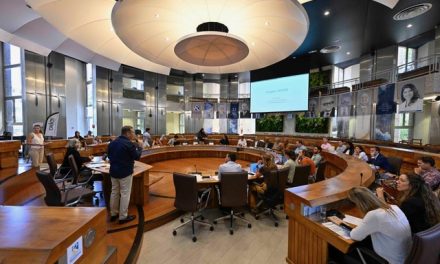
Le conseil d’administration de l’Economic Development Board (EDB) s’est réuni le 27 juin dernier pour valider un ensemble de réformes stratégiques. Ces mesures visent à accélérer la transition de l’île Maurice vers une économie à forte valeur ajoutée, basée sur la connaissance et l’innovation.
Elles s’articulent autour du développement des compétences, de la facilitation des affaires, de l’innovation numérique et de l’attraction des investissements.
Voici le détail de ces réformes communiqué à notre rédaction :
- Marché du travail et rétention des talents
À la suite d’un atelier tenu le 12 juin 2026 sur la pénurie de main-d’œuvre, l’EDB a validé un plan d’action ciblant les secteurs clés : santé, TIC, construction, hôtellerie, agro-industrie, intelligence artificielle et FinTech. Les priorités incluent la révision des programmes d’études, l’introduction de micro-certifications, l’engagement de la diaspora et l’attraction de compétences internationales. De plus, un nouveau Technical Occupation Permit facilitera le recrutement de professionnels étrangers via des accords de gouvernement à gouvernement (G-to-G), directement intégrés au système NELS (National Electronic Licensing System). - Innovation numérique et facilitation des affaires
Le conseil d’administration a approuvé l’octroi de deux nouveaux certificats d’investissement dans le domaine des technologies digitales pour des entreprises ciblant les marchés mondiaux, notamment l’Afrique subsaharienne et le Moyen-Orient. Par ailleurs, en lien avec le futur Business Facilitation Bill, l’EDB travaille sur la simplification des permis. Ce projet de loi introduira le principe de l’accord tacite (Silent Agreement Principle), validant automatiquement une demande si l’autorité ne se prononce pas dans les délais impartis. - Nouveaux régimes de résidence et Golden Visa
Le cadre opérationnel du programme Strategic Golden Visa a été présenté. Il permettra aux citoyens étrangers investissant un minimum d’un million de dollars américains dans des secteurs prioritaires (FinTech, énergies vertes, aquaculture) d’obtenir la résidence permanente. Les critères d’investissement et les seuils salariaux pour les professionnels ont également été révisés conformément aux annonces budgétaires. - Bilan des investissements et transition énergétique
Entre avril 2025 et mai 2026, l’EDB a approuvé 63 projets majeurs totalisant 159,3 milliards de roupies (environ 3 milliards d’euros NDLR). Parallèlement, seize projets d’énergies renouvelables, représentant 8,75 milliards de roupies(env. 160M€), ont obtenu leur certificat d’enregistrement. Si quatre d’entre eux rencontrent actuellement des difficultés réglementaires ou de droits de passage, l’EDB collabore activement avec les autorités pour débloquer leur mise en œuvre. - Feuille de route pour le Budget 2026/2027
Une feuille de route en vingt points a été dressée pour concrétiser les mesures du budget. Elle englobe le déploiement d’infrastructures numériques (plateforme pour l’e-diaspora, visa étudiant en ligne), des réformes réglementaires et des incitations spécifiques pour la zone économique spéciale de Côte-d’Or dédiée à l’intelligence artificielle.
English Resume
Measures target skills development, business facilitation, digital innovation, investment attraction and implementation of Budget 2026/2027 priorities.
The Board of the Economic Development Board (EDB) has approved a set of priority reforms to support our transition towards a high-value, knowledge-based and innovation-driven economy.
The decisions, taken at the Board meeting held on Saturday, 27 June 2026, aim to strengthen the country’s talent pipeline, simplify business processes, attract strategic investment and accelerate delivery of key national economic measures.
- Advancing Labour Market Reform and Talent Development
The Board took note of the action plan following the EDB workshop on “Addressing Skills Gaps and Labour Shortages in the Mauritian Labour Market,” held on 12 June 2026. The plan is designed to better align skills supply with demand in healthcare, ICT, manufacturing, construction, hospitality, agro-industry, AI, FinTech and digital technologies.
Key priorities include industry-driven curricula, stronger TVET delivery, international talent attraction, diaspora engagement, workforce retention, improved labour market intelligence, a national workforce planning framework and the introduction of microcredentials.
- Fast-Tracking Technical Talent Through G-to-G Arrangements
Under the Work and Live initiative announced in Budget 2026/2027, the Board reviewed the operational framework for the new Technical Occupation Permit. The permit will facilitate the recruitment of foreign professionals through Government-to-Government arrangements and be integrated into the National Electronic Licensing System (NELS).
- Investment Certificate – Digital Technology and Innovation
The Board approved the issue of two new Investment Certificates in the Digital Technology and Innovation sector, supporting companies that will establish operations in Mauritius to serve global markets, including sub-Saharan Africaand the Middle East.
- Streamlining Business Licensing
The Board took note that EDB will work on a comprehensive business licensing exercise linked to the forthcoming Business Facilitation Bill. Drawing on NELS data and private-sector feedback, the EDB will propose legal amendments to streamline permits, licences, clearances and authorisations.
The Bill, as announced in Budget 2026/2027, will introduce statutory timeframes and the Silent Agreement Principle, under which approvals will be deemed granted where authorities do not issue a decision within the prescribed deadline.
- Strengthening Responsible Business Conduct
Following Mauritius’ adherence to the OECD Declaration on International Investment and Multinational Enterprises, the Board approved the reconstitution and staffing of the NCP Mauritius Secretariat.
- Enhancing Investment and Residency Schemes
The Board noted revised criteria for investment and residency schemes as announced in the last Budget Speech, including clearer investment requirements, milestone-based evaluation for innovative start-ups, improved facilitation for technical personnel under G-to-G agreements and new salary threshold for professionals. Guidelines and NELS integration will be ready upon promulgation of the Finance (Miscellaneous Provisions) Act.
- Introducing the Strategic Golden Visa Framework
The Board took note of the operational guidelines for the Golden Visa programme. Non-citizens investing a minimum of USD 1 million in priority sectors such as FinTech, green energy, aquaculture, and approved public offerings may qualify for Permanent Residence.
- Expanding International Investment and Trade Outreach
The Board finalised plans for key international missions in the second half of 2026, including the Source Fashion, Africa Down Under Conference in Perth and the SIAL Exhibition to promote Mauritian food and agro-industrial exports.
- Investment Project Portfolio Update (April 2025 – May 2026)
The Board reviewed a status update on investment projects approved between April 2025 and May 2026. During this period, 63 projects were approved, representing a total investment value of Rs 159.3 billion. In addition, 16 renewable energy projects were issued Registration Certificates, with a combined investment value of Rs 8.75 billion. This portfolio reflects our continued ability to attract large-scale, diversified projects across hospitality, ICT, education, manufacturing, agro-industry and renewable energy.
With respect to implementation, seven projects have progressed to the construction phase or are entering active implementation. Most education and ICT projects that have been issued Investment Certificates have either commenced construction or are already operational, while agro-industrial projects continue to advance in line with their implementation timelines.
Of the 16 renewable energy projects, four are currently facing challenges related to wayleave approvals, land-use matters and regulatory alignment. The EDB is actively engaging with the relevant stakeholders and authorities to facilitate the resolution of these issues and support the timely implementation of the projects.
- Driving Budget 2026/2027 Implementation
The Board took note of a 20-point roadmap to implement Budget 2026/2027 measures under the EDB’s mandate, with actions covering digital infrastructure, ease of doing business, sectoral development, and fiscal and regulatory reform.
Digital Infrastructure – AI chatbot on NELS, National E-Diaspora Platform and Online Student Visa system.
Ease of Doing Business – Business Facilitation Bill, streamlined event permits and Freeport Act amendments.
Sectoral Development – Fish farming zones, barachois, Startup Accelerator Scheme and Côte d’Or AI SEZ incentives.
The EDB will work closely with public- and private-sector partners to support timely implementation of these measures and strengthen Mauritius’ position as a competitive, innovation-driven investment destination.